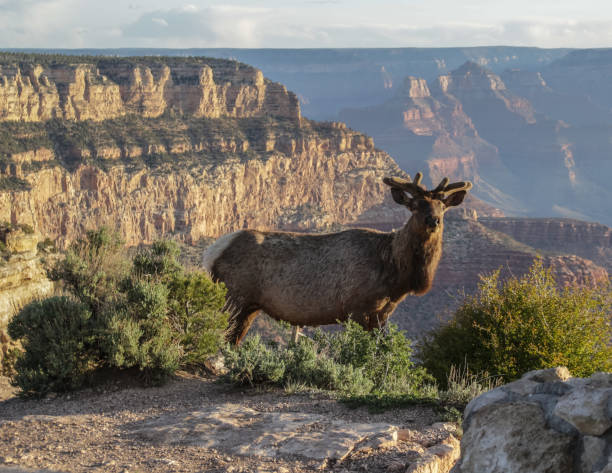
The Difference between Elk, Mule Deer, and White-Tailed Deer
My family and I went to Arizona, US, for vacation. It was amazing. We hiked through the rocky trails of Sedona, explored the Meteor Crater, and visited the Grand Canyon.
227 miles long, the massive Grand Canyon is home to many animals, like bats, bighorn sheep, bison, and deer.
One day, we were driving in the Grand Canyon when a deer came from the forest. It was calm, with their babies and grazing.
I later found out it was a Rock Mountian Deer, but there are other similar deer, like the White-Tailed Deer and the Mule Deer. They look all similar but have different behaviors.
In this article, we’re going to talk about the difference between Elk, White-tailed deer, and Mule deer.
Elk Deer
Although they are not exactly deer, they are a type of deer and look similar.
1. Their fur is reddish brown and has a short tail. Male Elks (bulls) have big branched antlers that regrow each spring, but female Elks (cows) don’t. Both have a rump patch. Elk can live up to 10-20 years.
2. Elk deer are herbivores, eating grass, leaves, and shrubs. Sometimes they eat bark during the winter, so they usually live in grasslands, forests, and mountain regions. They usually live in herds for protection and in fall, bulls will compete for the right to mate with females, often through bugling (a loud, high-pitched call) and physical displays of strength.
3. The primary predators of elk in North America are wolves, mountain lions, and bears. In some regions, humans are also a significant predator of elk due to hunting. Despite their size, elk are very agile and can run up to 45 miles per hour (72 km/h) to escape danger. They also use their strong hooves to defend themselves if needed.
Their scientific name is Cervus canadensis.
Mule Deer
1. Smaller than the elk, and characterized by their long, wide ears. They have a light brown or grayish coat, with a white underside and tail. Males, known as bucks, have antlers that grow annually and shed in the winter. Adult mule deer bucks can weigh between 150–300 pounds, while does (females) typically weigh between 100–150 pounds.
2. They are highly adaptable, with populations in areas ranging from the high mountain ranges of the Rockies to the lowlands of the Great Basin and desert areas of the Southwest.
3. Mule deer are known for their ability to cover large distances, especially when migrating from high-altitude summer ranges to lower-elevation winter ranges. They often form small herds during the winter but tend to be more solitary during other times of the year. When fleeing from predators or navigating obstacles, mule deer are capable of leaping over fences and other obstacles with their powerful legs.
Their scientific name is Odocoileus hemionus.
White-Tailed Deer
1. Like other whitetail deer, they have the characteristic white underside of their tail, which they raise when alarmed. However, the Grand Canyon subspecies are generally smaller and more adapted to the rugged canyon environment.
2. They are found primarily in the Grand Canyon area of Arizona, particularly in riparian zones—areas where water is readily available, such as along the Colorado River and its tributaries.
3. These deer are typically solitary or form small groups, and they are known to be especially agile when navigating the steep, rocky terrain of the canyon.
Their scientific name is Odocoileus virginianus
These types of deer are very unique in their own way. From food to abilities, they each have their charm. They may be different in the way they act and look, but they are all fascinating animals!